

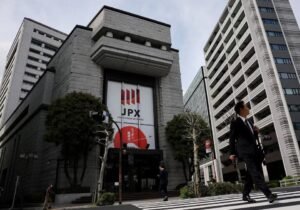
Global crude oil prices climbed to their highest levels in nearly two weeks on Tuesday as diplomatic negotiations between the United States and Iran hit a stalemate. The deadlock, coupled with looming U.S. inflation data, left Asian equity markets drifting amid renewed worries over global economic stability. The market disruption follows a sharp escalation in rhetoric from Washington. U.S. President Donald Trump responded to Iran’s conditions for a peace agreement and the reopening of the crucial Strait of Hormuz by demanding compensation for victims of past conflicts, attacks and protests, a move expected to further complicate negotiations.
In energy trading, Brent crude futures rose to $88.09 per barrel, while U.S. West Texas Intermediate crude climbed to $82.52 per barrel. Both benchmarks hit their highest levels since late July, extending a roughly 5% surge from the previous session. Market analysts described the geopolitical impasse as a high-stakes standoff. “We’re now in a bit of a Mexican standoff… in terms of who blinks first,” noted Tony Sycamore, a market analyst at IG, warning that crude prices could remain bound between $75 and $95 per barrel as the diplomatic war of attrition plays out.
The sudden uptick in energy costs has raised the stakes for the upcoming U.S. July Consumer Price Index report. Forecasters expect headline inflation to rise by 0.1% month-over-month, with core inflation projected at 0.2%. Financial observers warn that any hotter than expected inflation metrics could tip the scales toward another Federal Reserve interest rate hike next month, an outcome currently viewed by markets as a coin toss. Jonas Goltermann, chief markets economist at Capital Economics, cautioned that upside inflation risks could revive stagflation concerns given that the U.S. economy continues to run hotter than desired. Meanwhile, regional monetary policy reflected broader caution. The Reserve Bank of Australia opted to hold its cash rate steady at 4.35% for a second consecutive meeting, though it explicitly left the door open for future rate hikes if inflationary pressures persist.
Broader Asian equities reflected the delicate sentiment. MSCI’s index of Asia-Pacific shares outside Japan fluctuated before posting a modest 0.36% gain, while South Korea’s KOSPI advanced 1.3%. In China, Hong Kong’s Hang Seng dropped 0.6%, and mainland blue chips slipped slightly. In corporate developments, chip giant Nvidia announced a partnership with six major financial institutions to launch compute financing platforms, aiming to leverage over $500 billion in third-party capital for artificial intelligence infrastructure. In foreign exchange markets, the Japanese yen struggled near 159 per dollar, remaining under pressure despite multiple suspected intervention efforts by Japanese and U.S. authorities. Stronger crude prices provided marginal support to the U.S. dollar, while spot gold edged higher to $4,402.52 an ounce.
Distipanna Bhuyan