

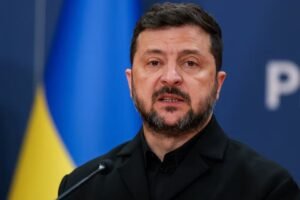
In a major diplomatic effort to reshape the trajectory of the ongoing war with Russia, Ukrainian President Volodymyr Zelenskyy confirmed that Kyiv has officially transmitted a new, structured peace proposal to the United States government. Delivering his nightly address to the nation, Zelenskyy emphasised that direct and proactive engagement from Washington remains indispensable to breaking the prolonged diplomatic stalemate that has gripped the conflict. Central to Ukraine’s proposal is a request for enhanced military cooperation, particularly the rapid reinforcement of Ukraine’s air defense systems to protect civilian population centres and energy infrastructure from relentless long-range Russian drone and missile strikes. Zelenskyy argued that bolstering Ukraine’s defensive capabilities while simultaneously intensifying international economic sanctions against Moscow is the most effective mechanism to force the Kremlin into serious negotiations aimed at concluding the war rather than indefinitely extending it. This diplomatic push precedes anticipated visits by US envoys Steve Witkoff and Jared Kushner to the region, highlighting Kyiv’s determination to revive formal talks despite fundamental disagreements, such as Moscow’s insistence that Ukraine surrender four annexed regions as a prerequisite for any permanent settlement.
At the same time, President Zelenskyy issued a stern warning regarding Russia’s domestic political strategy, asserting that President Vladimir Putin plans to utilise upcoming parliamentary elections as a political springboard for a massive and renewed military draft. According to Ukrainian intelligence assessments shared during the address, the Kremlin intends to execute a pseudo-electoral process to project a false narrative of public consensus for the war effort. Immediately following the vote, Moscow is reportedly preparing to launch a rapid, autumn mobilisation campaign designed to conscript several hundred thousand additional soldiers by the end of the year, with secondary recruitment waves planned for 2027. Although Russian officials have consistently denied the necessity of a second large-scale mobilisation, Ukrainian officials maintain that Moscow is preparing to replenish heavy troop losses sustained along the front lines. The warning underlines the dramatic contrast between diplomatic gestures and tactical realities, as both nations continue to prepare for extended high-intensity combat alongside backchannel negotiations. Amidst the diplomatic manoeuvring and battlefield tension, US President Donald Trump announced a rare humanitarian breakthrough with the release of former US Marine Robert Gilman, who had been detained in Russia since January 2022 following an alleged altercation with a Russian police officer.
Kremlin officials agreed to release Gilman on humanitarian grounds so he could receive urgent medical treatment in the United States, with Washington clarifying that no Russian prisoners were exchanged as part of the arrangement. Gilman’s release represents a minor point of diplomatic cooperation against a backdrop of broader geopolitical confrontation, where peace talks have frequently stalled or been sidelined by surrounding global crises, including recent escalations involving Iran and the Strait of Hormuz. Despite these sporadic humanitarian gestures, the overarching conflict remains deeply entrenched, with both Kyiv and Moscow taking aggressive steps on the military, political and diplomatic fronts to dictate the terms of any future negotiations.
Distipanna Bhuyan