

The Union Government’s handling of the Manipur crisis has drawn widespread criticism for what civil society groups, opposition leaders, and regional political observers view as systemic central neglect. Despite the prolonged nature of the conflict, the Centre’s strategy has predominantly relied on perimeter management, deploying central armed police forces and army personnel to maintain physical buffer zones rather than driving an active, top-level political peace process. The absence of visible, sustained political leadership and direct federal mediation from top central officials has deepened feelings of abandonment among displaced populations in both hill and valley communities.
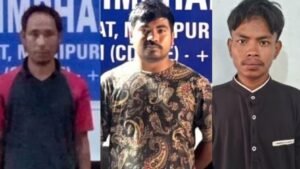
The imposition of President’s Rule in early 2025 offered temporary containment. However, direct central administration without a transparent political roadmap failed to address the core drivers of the unrest, leaving behind an institutional void that continues to stall long-term peacebuilding. This political vacuum is clearly reflected in the ongoing tactical operations across the state, such as the recent arrest of three suspected members of banned insurgent outfits like the United National Liberation Front and the People’s Revolutionary Party of Kangleipak during joint police operations across Imphal East and Imphal West. Accompanied by a substantial arms seizure in Imphal West that included eight SBBL rifles, a 9mm pistol, hand grenades, live ammunition and walkie-talkies, these intelligence-led operations highlight the constant vigilance maintained by security personnel. However, these regular weapon recoveries also serve as a stark reminder that sub-surface insurgent networks continue to entrench themselves and exploit the socio-political collapse to recruit, re-arm and assert local control. Relying primarily on law enforcement drives exposes a fundamental security dilemma, as tactical search and seizure operations alone cannot replace a comprehensive political resolution. Frequent discoveries of weapon caches, spanning military-grade rifles to improvised explosive devices, underscore how deeply armed groups have capitalised on the social disruption. Without a parallel effort to drive inclusive, cross-community dialogue, security crackdowns risk reducing the crisis to an endless cycle of militarised containment while leaving underlying grievances regarding land rights, political representation and ethnic security completely unaddressed.
The ground reality in Manipur continues to transition through delicate political and security phases, especially following the revocation of President’s Rule in February 2026 and the subsequent formation of a new state government under Chief Minister Yumnam Khemchand Singh. Despite this transition back to elected governance, the state faces asymmetric instability characterized by localised insurgent extortion, targeted violence and persistent highway blockades along vital lifelines like National Highways 2 and 37, which create severe economic and humanitarian strain for local populations. Predicting a definitive timeline for when the conflict will end remains complex, as a sustainable conclusion requires addressing deep-seated structural issues rather than managing immediate lawlessness.
Durable peace will only be attainable when comprehensive cross-community disarmament is executed under neutral federal oversight, formal political negotiations resolve core constitutional and administrative demands and genuine civil society initiatives rebuild inter-community trust and restore freedom of movement across the state. Moving forward, the overarching challenge for both state and central leadership remains transitioning from perimeter security toward sustained democratic dialogue and structural peacebuilding.
Distipanna Bhuyan